Georg
Baselitz
Baselitz
German, 1938 — 2026
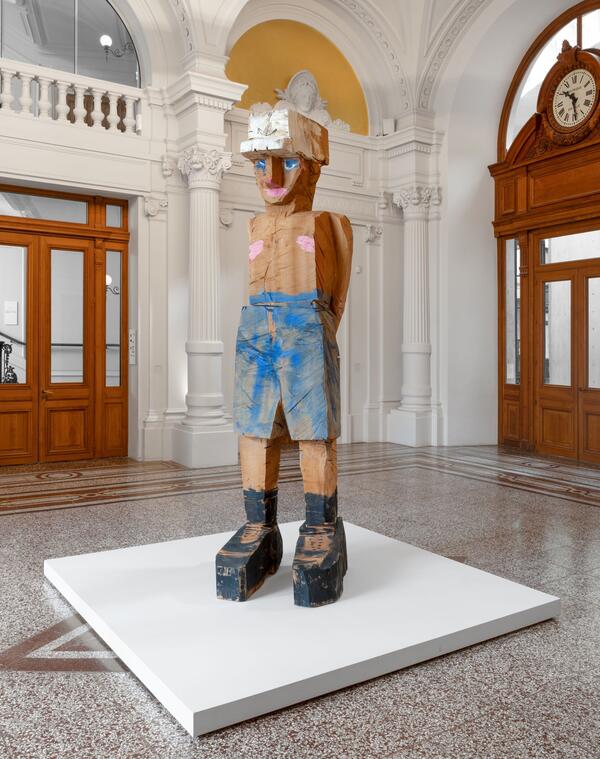
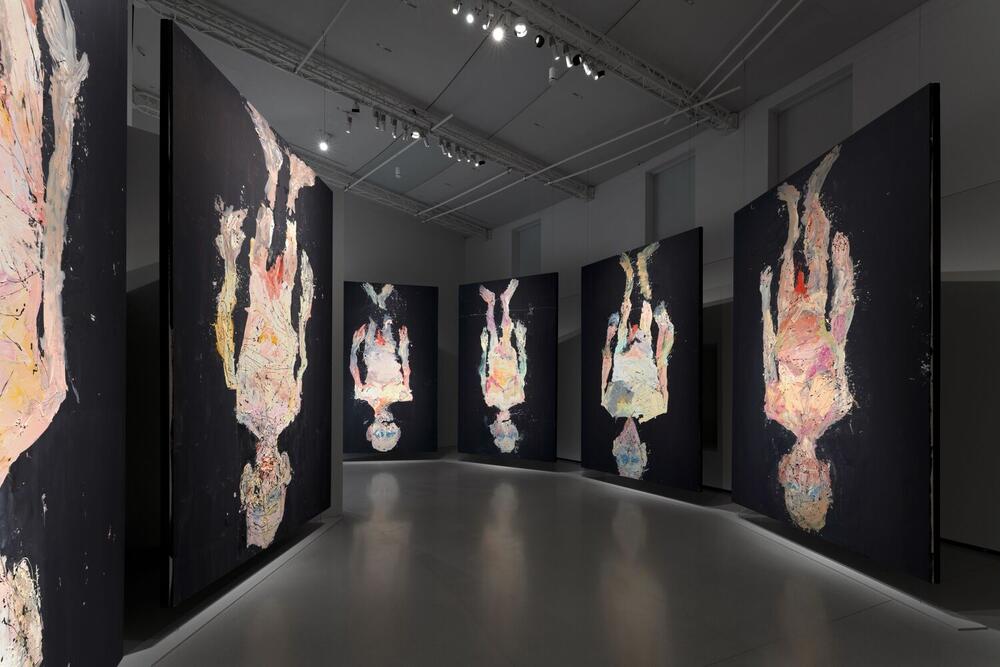
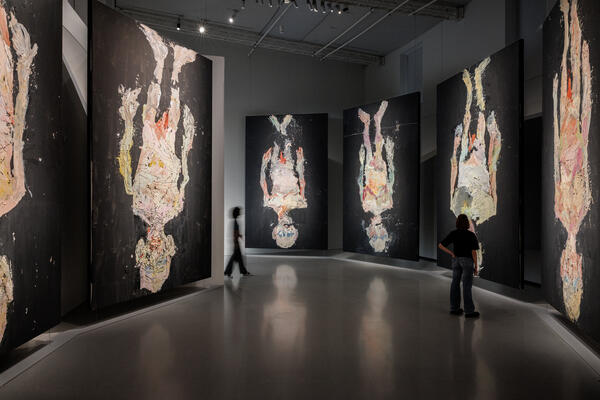
Born in Deutschbaselitz (Germany) in 1938 during the Nazi regime, Georg Baselitz is a painter and sculptor whose training in Berlin took place in the middle of the Cold War. As a major figure of neo-expressionism, he participated in the revival of German painting after the Second World War. Influenced by the post-war context, he was critical of art history and its masters. By using transgression as his modus operandi, Georg Baselitz has created a nonconformist and raw body of work, where violence is both formal and symbolic. In 1969, he upended the motifs of his paintings: turned upside down, they shook up tradition and relegated the motif – as the primary vehicle for ideology – to the background. The formal and symbolic violence in his oeuvre, as a reaction to human trauma and the tragedies of German history, sometimes caused outrage, as at the 1980 Venice Biennale where he presented Modell für eine Skulptur, a wooden sculpture whose raised arm was reminiscent of the Nazi salute.